
Voyeurism meaning in simple words: getting sexual arousal from watching other people undress or have sex. In everyday talk, it also means taking pleasure in peeking at something private or scandalous.
The word gets used in many ways. It can describe a sexual interest, a mental health diagnosis, a crime, or even your habit of reading celebrity gossip. This guide sorts it all out, in plain English.
What Is Voyeurism? Definition and Voyeurism Meaning
Voyeurism is the act of watching others for pleasure. The key question is always the same: did the other person agree to it?
What is voyeurism? Merriam-Webster defines it as the desires or behavior of a voyeur. That includes getting sexual gratification from observing others. It also covers the crime of secretly viewing someone in a place where they expect privacy.
What is a voyeur? A voyeur is the person doing the watching. The word comes from the French voir, meaning “to see.” Merriam-Webster traces voyeurism in English to 1913.
What is scopophilia? It is another name for voyeurism. It comes from Greek roots meaning “love of watching.” A person with this interest may be called a scopophiliac.
What does voyerismo mean? Voyerismo is the Spanish word for voyeurism. The meaning is the same.
The word has also grown beyond the bedroom. People now use it for any thrill taken from scandalous or private sights. Think tell-all memoirs, leaked diaries, or true-crime binges.
Here is how voyeurism compares with similar terms:
| Term | Simple meaning | Consent involved? |
|---|---|---|
| Voyeurism | Arousal from watching others | Can be yes or no |
| Exhibitionism | Arousal from being watched | Can be yes or no |
| Peeping Tom | Someone who spies on others in secret | No |
| Scopophilia | Love of watching | Not always |
| Eavesdropping | Secretly listening in | No |
| Snooping | Prying into private things | No |
One rule separates healthy from harmful. WebMD says responsible voyeurism needs the informed consent of everyone involved. Without it, the behavior is a problem and often a crime.
Unusual behaviors and experiences can sometimes lead to broader questions about symbolism, instincts, and the hidden meanings we associate with unexpected encounters. In that context, centipede spiritual symbolism offers another fascinating perspective on adaptability, protection, and personal transformation.
Voyeurism Psychology: Why Do People Become Voyeurs?
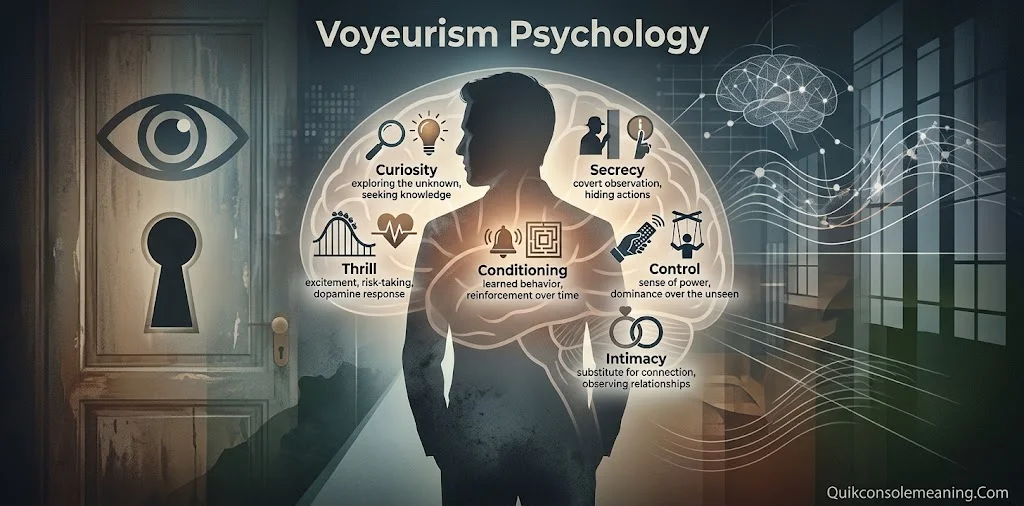
No single cause explains voyeurism. Experts point to a mix of curiosity, learning, and personal history.
Is voyeurism a mental disorder? Not by itself. The DSM-5, the main guide used by U.S. mental health professionals, treats it as a paraphilia. That means an unusual sexual interest. It only becomes a voyeuristic disorder when it causes distress or harms others. You can read more at the American Psychiatric Association.
The DSM-5 sets clear lines for the disorder:
- The urges or acts must be intense and repeated over at least six months.
- The person must act on the urges with a non-consenting person, or feel real distress about them.
- The person must be at least 18 years old.
How common is it? More common than most people think. Research cited in the DSM-5 suggests voyeuristic behavior is reported by roughly 12% of men and 4% of women. Most of these people never get a diagnosis.
Why does it happen? Researchers and clinicians often name these drivers:
- The thrill of the forbidden. Secrecy and risk add to the rush.
- Control and power. Watching without being seen can feel like holding the upper hand.
- Early conditioning. Strong arousal linked to watching, early in life, can shape later habits.
- Trouble with closeness. Some people find real intimacy hard, so watching feels safer.
Does a voyeur always become dangerous? No. A fantasy is not an action. Many adults have voyeuristic fantasies and never cross a line. The risk starts when someone acts without consent.
Technology has changed the picture. Tiny cameras, phones, and smart devices make secret recording easy. That is why digital voyeurism, like hidden cameras in rentals or sharing private images, now fills many court cases.
When exploring the psychology behind voyeurism, it can also be interesting to consider how the mind processes unusual or unsettling experiences during sleep and dreams. For those curious about symbolic dream experiences, dreams about bruises on arms may carry themes of emotional pain, vulnerability, or unresolved feelings.
Signs of Voyeurism: Healthy vs. Problematic Behavior
Not all voyeurism is a red flag. The signs that matter are about consent, privacy, and control.
What are the signs of voyeurism? Look for these patterns of pathological voyeurism, as described by WebMD:
- The urge feels compulsive or hard to stop.
- The person watches in secret, without the other person knowing.
- The behavior is tied to inner conflict or shame.
- The person cannot reach arousal or satisfaction any other way.
- It involves aggression or thoughts of harming others.
- It appears alongside other psychiatric disorders.
What does healthy voyeurism look like? It happens between consenting adults. Examples include role-play, a private striptease, or a shared fantasy. Everyone knows, everyone agrees, and anyone can say stop.
Try this quick three-part test:
- Consent: Does everyone know and agree?
- Privacy: Is anyone being watched in a place they expect to be private?
- Control: Can the person stop when they want to?
If any answer is “no,” it’s time to pause.
Can voyeurism be treated? Yes. A licensed therapist can help. Cognitive behavioral therapy (CBT) is a common approach, since it helps people spot triggers and change habits. In some cases, a doctor may add medication. Seeking help early lowers the risk of harm.
A word of caution on online content. Some amateur videos are filmed or posted without consent. Watching them can feed harm, so stick to material where everyone clearly agreed.
Is Voyeurism a Crime? Voyeurism Laws in the USA

Yes, in many cases it is. The law cares about two things: consent and a reasonable expectation of privacy.
What is criminal voyeurism? It means secretly watching or recording someone in a private place without their consent. Bathrooms, bedrooms, dressing rooms, and dorms are common examples. Using a phone or hidden camera makes it worse.
What does federal law say? The Video Voyeurism Prevention Act (18 U.S.C. § 1801) makes it illegal to knowingly record or broadcast an image of a person’s private area when they expect privacy. The law covers areas like the genitals, buttocks, and female breast. Under federal law, the maximum penalty is up to one year in prison.
What about state law? Each state sets its own rules and penalties. Florida, for example, bans secretly watching someone with “lewd, lascivious, or indecent intent” where they expect privacy. Depending on the state, charges can be a misdemeanor or a felony. Cases involving a child are often treated far more harshly.
What should a victim do?
- Move to a safe place and keep any evidence, such as photos or messages.
- Report it to local police.
- Talk to a lawyer about your rights.
- Call the RAINN National Sexual Assault Hotline at 1-800-656-4673 for support.
This section is for general information only. It is not legal advice. Laws change, so check your state’s rules.
FAQs
Is voyeurism a crime?
Yes, when someone secretly watches or records another person without consent in a place where privacy is expected. Consensual voyeurism between adults is not a crime. Federal and state laws both apply.
What is meant by voyeur?
A voyeur is a person who gets sexual pleasure from watching others. In wider use, it means someone who enjoys prying into private or scandalous matters. The word comes from the French voir, “to see.”
What does voyeur mean in crime?
In criminal law, a voyeur is someone who secretly views or records another person in a private setting without consent. Charges are often called “voyeurism” or “video voyeurism.”
What is the meaning of voyerismo?
Voyerismo is the Spanish word for voyeurism. It means getting pleasure or arousal from watching others, often in secret.
Conclusion
Voyeurism is not one thing. It can be a private fantasy, a clinical diagnosis, or a serious crime. Consent is what separates them. When people agree and feel safe, it is simply a form of desire. When someone is watched in secret, it becomes a violation of privacy, and the law steps in. If urges feel out of control, a doctor or therapist can help, and reaching out early makes a real difference.

I’m a passionate writer and language enthusiast who enjoys making words, phrases, slang, and everyday expressions easier to understand. I create clear, straightforward explanations that help readers quickly discover the meaning, usage, and context behind unfamiliar words.